Tuesday, May 13, 2014

Caveman Training

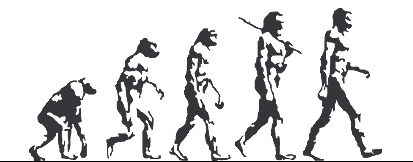
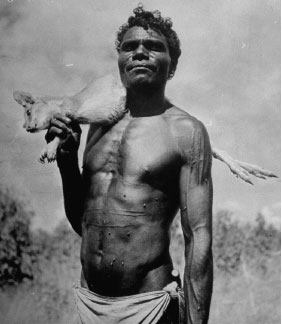
- This summer I want to start my Caveman training (it's basically High Intensity Training or H.I.T. in a more unconventional way).  Now, when I say ‘Caveman training’ I don’t mean I am going to be running around screaming with a club chasing animals, but rather I am going to try my best to work out a training regime that somewhat simulates the activity of our hunter-gatherer ancestors.  This kind of training I have wanted to try for a while, I just never had the time or really the means to do it.  I want to incorporate cardio, strength, as well as full body workouts to see how my body will react, feel, look, and function.  I am going to do my best to replicate what our bodies essentially evolved to do everyday.  We as humans, the apex predator on this planet, were not designed to sit around everyday scratching our heads and twiddling our thumbs, we were built to run 40 miles a day and kill woolly mammoths.  Now, I am not going to be doing that per-say, but I am going to try to bring some of that evolution out in my training.

- Many people give me a bizarre look when I tell them not a cheetah, not a horse, lion or tiger can compare to humans when it comes to running.  Humans are the greatest runners in the world.  This is evident in not only our biology but through flat out physical world observations as well (I know you may still be skeptical so here is some science) . Yes, a cheetah, horse, lion or tiger would beat us out in a full on sprint but we are not meant to be sprinting against other animals, humans were built for the grind. We are built for distance running. If you STILL don't believe me, there has even been recent showings of our running superiority, in 2013 four Kenyans ran down cheetahs that were killing their goats!  

- My fascination into how epic the human body can be came about when I read Born to Run . This book speaks of the ancient Tarahumara tribe who are known to have the greatest runners in the world.  Many are ultra-marathoners but never compete (Ultramarathons are usually around 50-100 miles) they simply run everywhere because they love it and are GREAT at it.  The Tarahumara's running skills are nothing special, they don't do anything crazy or out of the ordinary, they have simply held onto our species's ancient tradition of running everywhere.  Humans have a very special anatomy when it comes to endurance.  Our bodies were built for the hunt, plain and simple.  We are supposed to find our prey by either trapping it, killing it, catching it, confusing it, or by EXHAUSTING it.  Unlike most other mammals that cool down or sweat from panting through their mouths, we humans have sweat glands over our entire body to help us cool down.  Other animals may be faster than us in an all out sprint but our persistence is what truly separates us from all other predators and prey.  

- This is where the most badass (in my opinion) and oldest form of hunting comes from it's called, persistence hunting . Let's say for example we are chasing an large herd of Elk, the Elk would undoubtably sprint away from us (for the obvious reasons), but with our superior intellect and physical prowess we could catch one. A 'team' of men so to speak, would work together to ambush and tactfully take down the Elk. Let's say 2-3 men charge the herd while 2-3 are off in a designated area waiting with spears; initially 2-3 men (the runners) pick out an Elk and try to isolate it, they then charge the herd in turn causing panic and one of the Elk to separate itself from the herd and hopefully it will run toward the other men waiting with spears. Whether the spears hit the Elk or not they would then have to follow its tracks for however long it takes us to catch up to it (it would rarely die instantly even if hit).  This whole time the animal has put out a massive amount of energy and it begins to overheat (you'd be tired too if you were running from a group of cavemen trying to eat you).  Due to this overheating the animal searches for shade or pants constantly to help cool its body.  THEY CANNOT DO THIS WHILE RUNNING.  Meanwhile, while the animal is trying to recover from exhaustion and overheating, slowly but surely the team is running it down and closing the gap. Unlike the Elk, we can continually run because of our sweat glands which are constantly helping us cool down; our bodies were designed for this kind of persistence.  As a few hours pass the men close the gap and the Elk is in their sights, the Elk is still either overheated and exhausted or slowly bleeding out. The Elk, now very tired and overheated or wounded has a lot of trouble walking let alone running, and is in prime condition for the kill.  


- After this long haul of running then what? Well, after the kill is accomplished we would have to bring the Elk back to camp to feed the tribe. This is where our amazing feat's of strength come in. After running down an animal for hours and over several miles the men still have to get it back to camp.  They would have to either cut up the body or carry it back to camp as a unit.  I don't think anyone can deny that humans can be quite impressive when it comes to feats of strength. However, humans weren't bench pressing or doing squats and curls, but rather using their body as a whole, as one strong, stable, focused unit.  This is why I love my Kettlebell so much.  Kettlebells use our bodies as a unit and it promotes functional real world strength.  To me, it replicates having to carry around bizarrely weighted objects like that of animals or just simple things that occur in everyday life.  Running as well as weight or strength training is important because it is what our bodies were designed to do and that's what helps us to gain lean muscle that is not only important for survival but also optimum health. Okay, okay I know this sounds like crazy Paleo talk but there is plenty of evidence to support my claims here.  Aside from the Tarahumara, we can look at modern day hunter-gatherer cultures and see if any of this has validity.  

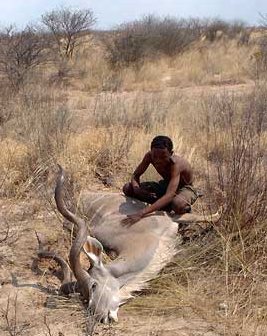
- My favorite example and my inspiration for deciding to create this work out regime came from The San of the Kalahari Desert (yeah, and people want to say that the Paleo diet is just a 'fad'). The San have been using techniques like persistence hunting for thousands of years, why? BECAUSE IT'S EFFECTIVE. That video (to me at least) further PROVES that we are truly the apex predator, not only are we smarter than every other animal but we are also physically superior (it's also perfect evidence to fight the vegans/vegetarians with when they say humans shouldn't eat meat).  

- If you have ever read anything on this blog before then you know I am the kind of person that likes to give reasons, examples, and evidence to why my thinking is the way it is. Well, now that I have got that out of the way let's get to the juicy part, THE WORK OUT! Basically MY training will consist of Brazilian Jiu Jitsu and MMA at night during the week and/or light running and KB in the morning and go to work during the day.  

- When my week is over and Saturday and Sunday arrive, I change my workouts from my full body Brazilian Jiu Jitsu and MMA training to a 'Caveman' oriented training regime. This is where the high intensity running and weight training come in.  I will incorporate sprints, distance running along with strength training. My family has recently adopted a dog, he is a rescue black lab named Tripp.  Being that Tripp is my BFF I am going to bring him along and get his ass in shape along with mine.  This will add some excitement to what could be a boring workout, it helps myself and Tripp bond (being that I have been at UConn for the last 5 months) which is always great and I simply enjoy his company.  Along with Tripp I will have my GF Cassie or a friend with me and we will both switch on and off each workout.  

- Here it is, ***we will be on one end of a football field with a 25lbs and 35lbs kettlebells next to me, I'll be facing the opposite endzone right next to Tripp.  Cassie will be between the two of us and throw a tennis ball as far as she can and I will be racing Tripp to get to the ball.  She can throw it about 60 yards plus what the ball will roll, so lets go with 80 yards.  I will be racing Tripp (a FAST dog) to that ball, (this will essentially be me running full clip at an animal and trying to grab it or cut it off from it's herd) but if Tripp grabs that ball before me I have to run 1/2 a mile around the track and do it all over again until I eventually snag the ball at LEAST 3 times.  After I hopefully grab the ball for a 3rd time I will jog back to my starting position and swing my kettlebell.
  • 10 cleans each arm (35lbs)
  • 10 swings each arm (35lbs)
  • 1 minute of Russian Twists (35lbs) 
  • 5 Turkish get-ups each arm (35lbs)
  • 2 minutes of KB crunches (35lbs)
  • 20 pushups
  • 10 clean and presses, each arm (35lbs)
  • 10 swings (35lbs)
 - After this is done, I will run 2 miles then walk my kettlebell (25lbs) in each arm for 100 meters or perhaps use a weight bag that I can throw over my shoulders and walk for a mile or 2.*** After this is all complete I will drink plenty of water, cool down and soak up some vitamin D from the sun, while Cassie goes. I'm sure Tripp will get a great workout from this and while Cassie is finishing her circuit he will sit next to me and drink plenty of water. So, when all is said and done... 

  • I would have run 80-100 yards full sprint about 5-8 times, 
  • Ran about 1-2 miles between sprints 
  • Swung the kettlebell for around 10-15 minutes 
  • Ran 2 miles 
  • Walked with weights.

- Now, this is a pretty intense work out, it is not supposed to be an exact mimic of the San tribe but it incorporates a lot of what they do (lots of running in short sprints and over long distances, as well as carrying heavy bizarrely weighted objects) and it is always subject to tweaks and changes, I hope to add steel maces, tires, weights/weighted sled and battle-ropes (all in good time) . I will sometimes utilize my training mask which helps to increase cardio and mimics high altitude training (it's not bs, I love it! It really does work).
  • High intensity sprints
  • Long distance running
  • High intensity strength training
  • Low intensity strength training
  • Slow cool down process
  • Lots of Sun
  • Functional cardio and strength training
- These workouts are going to be burning a lot of energy, I will change my diet accordingly to how I feel but for a general blueprint here is what my average Saturday would look like...
  • Wake up, drink a tall glass of water
  • Breakfast: Coffee mixed with 2 tbsp of unsalted kerrygold, 1-2 tbsp of MCT oil
  • WORKOUT
  • Lunch: Kale & sprout/spinach salad with Olive Oil & Balsamic Vinegar, 1-2 eggs, glass of water with 1 tbsp of grass-fed collagen, 1 piece of fruit with some cinnamon and local honey
  • 2-5PM: Lots of water, sit down, relax, recover
  • Dinner: Wild Salmon, sprouts, broccoli, and kale salad with Olive Oil & Balsamic Vinegar
REST AND SLEEP ARE NOT TO BE OVERLOOKED...
- Sleep, affects everything from tissue repair and muscle building to hormone regulation. When we do not get enough sleep (or if we are really stressed out) the cortisol levels in our blood increase, which in turn creates insulin resistance by pumping glucose throughout the body. Insulin resistance causes weight gain (plus the cortisol telling your body to hold onto some extra fat doesn't help!) along with that, cortisol imbalances as well as lack of sleep lowers the immune system, it becomes more easy to get sick, longer to recover and even takes longer to digest food! Not only that, but believe it or not the ecosystem in your gut, (you know the trillions of bacteria we play host to?!) becomes damaged and it can cause things like digestive issues as well cause some gastrointestinal problems. Lack of sleep can also cause adrenal fatigue which can cause thyroid problems and an even larger host of hormonal imbalances. Many people do not understand the importance of sleep and recovery; you should not be in the gym everyday, your body needs to recover to not only repair itself from the stress you just put on it but to also build muscle and replace damaged tissue with healthy tissue which in turn helps your muscles grow. Recovery and sleep are very important, over training is doing your body a great disservice. This is something hunter-gatherers do. They will have spurts of physical exertion and then take a couple of days to relax, rest, and get plenty of sleep. Stress can wreak serious havoc on the body. Increases in cortisol and imbalances in hormones caused by stress and sleep deprivation is a great way to gain weight and steadily decline in health. 
Things that are good to get optimum sleep... 
  • Get at least 8 hours
  • Black-out shades and a pitch black room
  • No lights at all, LED lights are bad to have on during sleep, particularly blue LED lights
  • Try to wake up with the Sun , it helps to regulate our circadian rhythm as well as help our bodies produce the proper levels of cortisol.
  • Perhaps eat some fat before bed (maybe 1 tbsp of coconut oil) clean fats before bed gives your body a ready supply of energy; even though we are asleep our bodies are going to war. Fats like grass-fed butter, hemp oil, and coconut or MCT oil are all great choices. While asleep our bodies turn the fat into ketones and in turn helps our bodies have fuel to heal itself as well as burn fat. 


Sunday, March 30, 2014

Stop Counting Calories, Make Calories Count

       Ever since I ‘converted’ to the Paleo lifestyle I have received an astronomical amount of questions about it, which is fine and I enjoy answering them; however, the questions I do not appreciate are the ones where people are asking me what they should do to lose weight or drop a quick 10lbs for beach season. Now, I understand that weight-loss is most people’s main motivation for a dietary change, and even though the Paleo diet WILL aid in weight-loss I am always reluctant to give the summer season pound shedders advice, and here is why:
 - As someone who was overweight and even obese for a certain time I can sympathize with people who want to lose that excess body fat, I truly can.  However, my motivation for making a change this drastic in my life was much less superficial than I just want to be ‘skinny’.  I saw my eating habits, I saw my exercise (or lack of exercise), I saw my weight and my blood test results and I was appalled with myself.  Yes, I wasn’t happy with how my body looked, but I was far more dissatisfied with how I was treating it.  Sugar, complex carbs, soda, GMOs, MSGs, gluten, and artificial/chemical shit storms everywhere.  I made the change to a Paleo lifestyle to not just look good naked (which is awesome btw) but also to save my life (and subsequently your life as well).  I looked at myself in the mirror and realized that I was breaking and beating up my vehicle, I was not giving it what it needs and I was treating it horribly, I realized that my body is the vehicle I use to go through this craziness we call life.  I made a conscious choice to fuel and treat my body the way it was supposed to be treated because I realized that I am not a suboptimal person but I found myself becoming that way and it frightened me.  Due to this ‘self frightening’ if you will, I chose to look at myself objectively; I am smart, athletic and driven, so why am I treating myself like I am anything but that? I wanted to be optimized, in not only my physical appearance but in my mind, body and soul.
 - The Paleo diet isn’t a fad diet, nor is it a way to lose the quick pounds (even though you’ll lose excess fat fast).  It is a diet that recognized the entire BS surrounding us nowadays when it comes to nutrition.  It uses logic and science to not only prove its philosophies but also expose the fake ones.         


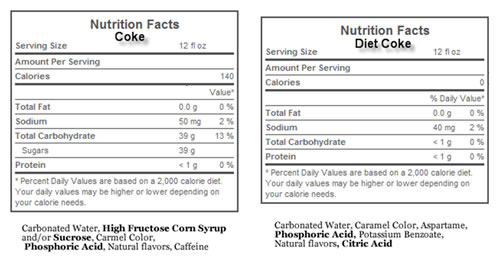
-Low-calorie/0-calorie, Sugar free, No Fat, Diet soda, and the countless other products shoved in the faces of aspiring weight-losers does nothing but confuse and distort most consumers views of what is and what is not healthy (I mean you should see the looks I get when I tell people I am on a high-fat, high-protein diet). These misleading ‘diet trends’ serve not the consumer but the corporations who make these products, the pharmaceutical companies who make the drugs to combat the illness brought about by these foods, and even the government who subsidize the grain and corn industries (that’s why the standard food pyramid is a JOKE).  These are businesses out to make $$$$$$$. They are not looking out for your health, they are looking out for their own interests, as well as the interests of their shareholders.
            
- Here it is plain and simple, CALORITIC RESTRICTION WILL HELP YOU LOSE WEIGHT (see laws of thermodynamics).  If you eat fewer calories than you use you’ll lose weight, it really is that simple. If you eat 1600-1800 calories of Pop-tarts you will in fact lose weight, however, do you think you will be healthy? Do you think your body will appreciate crappy food? What about your blood sugar? Hormones? Body fat? Body composition? Along with the lack of nutritional value many low-calorie/high carb diets just happens to have a huge host of problems to go along with them, things like: eating disorders, hunger, obsessive behavior, neurotic label reading and a plethora of other serious problems.
            

- The issue of people looking to ONLY lose weight is a serious issue in my opinion.  It has caused a mass of health problems and misinformation because more people are focused on counting calories rather than counting chemicals; to many people are worried about counting calories rather than MAKING CALORIES COUNT.  That crazy coffee I am always talking about: you know, the coffee with grass-fed butter and coconut oil? Well, that great, healthy, fat burning cup of epic has roughly 200-250 calories in it.  Those calories are the last thing on my mind, what I am thinking about is nutrition, the nutrients, and the benefits that are in that warm cup of healthy fat.
              
- I am a person who has tried their best to do their research.  I take very few things at face value, I do my research I teach myself, I critically analyze and I draw conclusions.  The Paleo diet not only was backed by its logic but the science as well.  It is not a weight-loss diet but rather a lifestyle change.  It was not there to help us be thin or look sexy; those are just added benefits to a healthy, clean lifestyle.  The Paleo diet is a way to treat diseases like diabetes, Crohn’s disease, cholesterol, autoimmunity disorders, leaky guy, high triglycerides, heart disease, Alzheimer’s, Parkinson’s, high or low blood sugar and almost any health problem you can imagine.  It is for people who want to lead healthy, active and optimized lifestyles not for someone looking to lose a quick 10lbs for the beach.
             
- This is something I can promise the person who is overweight and struggling with calorie counting or food intake restrictions (even you weight watchers or food plan diet people); YOU WILL LOSE MORE WEIGHT, BE FAR HEALTHIER, BE HAPPIER AND STRONGER IF YOU SIMPLY EAT REAL, NUTRIENT DENSE FOOD.  Real food will make excess weight fall off your body.  Real food helps regulate insulin, cortisol, cholesterol, and blood pressure and literally everything that biologically occurs in these chemical sacks we call bodies.  Real food will help to level out the proper amount of hormones in our blood as well as help our body recover faster and heal itself.  Restricting calories not only has a huge amount of negative mental side effects but biological ones as well.  It can lead to hormone imbalances and deficiencies, greater insulin resistance, weakness and fatigue, lack of energy, mental fog, hunger, increase in cortisol, increase in inflammation etc.

Here are some simple tips to losing weight healthily, properly and intelligently:

1.  Don’t count calories; make calories count. Not all calories are created equal.  Let’s just think about the simple comparison of a 100-calorie Oreo packet vs a 130 calorie tbsp of Coconut Oil.  Which do you think is healthier and has more nutrients?
2.  Don’t eat until you’re full; eat until you’re satisfied. You know people say it takes 20min for your body to tell you you’re not hungry anymore? That’s a lie.  Eat a plate of dense nutrients both micro and macro and trust me, you’ll feel satisfied right away.
3.  Drink more water! And only drink water! Not even coconut water! You will get your sugar from food
4.  Exercise Early It seems that the best weight-loss results stem from early morning workouts, due to our bodies natural biological processes of fat burning in sleep and in the morning (to much science to explain now)

5.  Get PLENTY of sleep.  Sleep is a major component of good health. It contributes to digestion, healing, recovery, mental health, and pretty much every biological process you can imagine and is a huge component to health and weight-loss.

Monday, March 10, 2014

Intermittent Fasting

As someone who has to pay close attention to their weight in order to fully prepare for their sport, I am always looking for different ways to maintain my weight while building muscle (or even a safe/healthy way to cut weight).  Now, lets look into intermittent fasting.  
            - Biologically and evolutionarily our bodies were not designed to eat 3 or 6 meals daily; but rather our bodies are designed to go for a surprisingly long time without caloritic consumption due to the obvious struggles of having to find and or kill our food.  There are plenty of studies to support this (which is not surprising), but what is surprising are the biological activities our bodies go through due to this intermittent fasting.  In men, intermittent fasting resulted in a 2,000% increase in Human Growth Hormone (HGH) secretion, which helped build muscle while also losing body fat.  This is because once our bodies sense we do not have food for energy it begins to use stored fat cells for energy, which in turn helps lose tricky body fat, and also helps detoxify your body. Now, lets take a look at what fasting is and how it works.

Here are the two biggest benefits of intermittent fasting:
·       Alternate-day fasting encourages fat oxidation as well as providing clean energy from fat as opposed to sugar.
·       Alternate-day fasting helps lower body weight, LDL, and triglyceride levels.
Intermittent fasting is not a diet, but rather a dieting patternSimply: it’s making a conscious decision to skip certain meals.
By fasting and then 'feasting' on purpose, intermittent fasting means eating your calories during a specific window of the day, and choosing not to eat food during the rest. To take it to an evolutionary standpoint, a caveman wouldn't wake up and look in his fridge; he would get up drink some water and start the hunt.
Now, there are a few different ways to take advantage of intermittent fasting:
  • Regularly eat during a specific time period.  For example, only eating from noon-8 PM, essentially skipping breakfast.  Some people only eat in a 6-hour window, or even a 4-hour window.  
  • Skip two meals one day, taking a full 24-hours off from eating.  For example, eating on a normal schedule (finishing dinner at 8PM) and then not eating again until 8PM the following day.
What I like to do is drink water and coffee in the morning of my fast and not eat until about 1-2 in the afternoon.  I drink water for the obvious reasons but I drink my coffee for several reasons:
  • Coffee is a powerful antioxidant
  • I use either coconut oil or grass-fed butter instead of cream and sugar
·       Coffee can improve exercise performance
·       Long-term coffee consumption is associated with a lower risk of type 2 diabetes. The more coffee you drink, the lower the risk
·       People who drink six or more cups of coffee per day are 50% less likely to develop diabetes.
·       In a study on 47,911 Americans, there was a correlation between coffee drinking and a lower risk of prostate cancer. Men who consumed the most coffee (six or more cups daily) had a 20% lower risk of developing any form of prostate cancer.
(See sources for more information)
Using fat in your coffee is good whether you're fasting or not but it is especially helpful when you are.  Our bodies, particularly our brain, run on water and fat.  With you consuming water and fat you help keep your cognitive function high while your body is using stored fat cells to give your body energy.
Now, you might be thinking: “okay, so by skipping a meal, I just eat less than normally overall, and thus I will lose weight, right?”  
Well, that’s partly true.  
            - Yes, by cutting out an entire meal, you are able to eat MORE food during your other meals and still consume a caloric deficit (which is an important for losing weight).  However, as we already know, not all calories are created equal, the timing of meals can also influence how your body reacts.  
            - With intermittent fasting, your body operates differently when “feasting” compared to when “fasting”: When you eat a meal, your body spends a few hours processing that food (burning/using what it can from what you just consumed).   Because it has all of this readily available, easy to burn energy in its blood stream (due to the food you ate), your body will choose to use that as energy rather than the fat you have stored.  This is especially true if you just consumed carbs or sugar as your body prefers to burn sugar as energy before any other source.
            - During the “fasted state,” your body doesn’t have a recently consumed meal to use as energy, so it is more likely to pull from the fat stored in your body, rather than the glucose in your blood stream. Resulting in loss of now ‘unneeded’ body fat. The same even goes for working out in a “fasted” state.  Without a ready supply of glucose to pull from (which has been depleted over the course of your fasted state, and hasn’t yet been replenished with a pre-workout meal), your body is forced to adapt and pull from the only source of energy available to it: the fat stored in your cells.
           
So, why does this work?  
            - Our bodies react to energy consumption (eating food) with insulin production.  Essentially, the more sensitive your body is to insulin, the more likely you’ll be to use the food you consume efficiently, which can help lead to weight loss and muscle building.

Along with that, your body is most sensitive to insulin after fasting.
            - Your glycogen (a starch stored in your muscles and liver that your body can burn as fuel when necessary) is depleted during sleep, and will be depleted even further during training, which can further increases insulin sensitivity. This means that a meal immediately following your workout will be stored most efficiently: mostly as glycogen for muscle stores, burned as energy immediately to help with the recovery process, with minimal amounts stored as fat.
Now lets compare this to a regular day (no intermittent fasting).  
            -With insulin sensitivity at normal levels, the carbs and foods consumed will see full glycogen stores, and see enough glucose in the blood stream, and therefore be more likely to get stored as fat. 

 - Not only that, but growth hormone is increased during fasted states (both during sleep and after a period of fasting).  Combine this increase in HGH and the decrease in insulin production, and you’re essentially priming your body for muscle growth and fat loss with intermittent fasting.  In other words, intermittent fasting can help teach your body to use the food it consumes more efficiently.  For many different physiological reasons, fasting can help promote weight loss and muscle building when done properly.  


My average fast day:
6-8AM
-Tall glass of water (occasionally putting a pinch of pink Himalayan salt in my water bottle)
-Coffee with coconut oil or grass-fed butter only

1-2PM
-Protein and greens for lunch. Maybe some eggs and kale

5-7PM
-If I swing my kettlebell I eat a small meal or no food at all or I consume a krill oil (I personally do this to simulate the failed hunt/kill)
-If I train I eat (to simulate a successful kill/hunt)

7-8PM
-Protein or greens for dinner

            Now, I do not suggest doing this if you are not comfortable with this dietary pattern.  The key is to do it intelligently in order for your bodily functions to react properly.  If at all you feel light headed, drowsy or sick EAT! Listen to your body. No one knows it as well as you; some people will react differently to fasting and or working out and fasting.

The best advice that I can give is to PAY ATTENTION TO WHAT YOUR BODY IS TELLING YOU.


Sources:


http://www.ncbi.nlm.nih.gov/pubmed/21586702